Any questions?










Choosing the right fence starts with four key questions: what's your budget, what type of land do you have, how much privacy or security do you need, and how much maintenance are you willing to handle over time? Your answers will naturally guide you toward a product family: wire mesh or rigid panels for structure, swing or sliding gates for access, composite or aluminum fencing for a more premium look, and privacy screens for added seclusion.
This guide is a starting point. Each section links to a detailed comparison to help you decide between specific options.
The Four Main Product Categories
1. Mesh Fencing: For Boundaries and Security
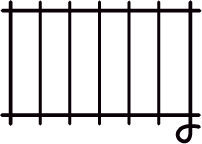
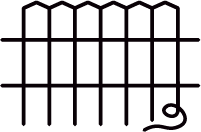
Wire mesh fencing remains the most common and budget-friendly way to enclose a property, with two main types: rigid mesh panels (welded, highly durable) and flexible mesh rolls (twisted wire, more affordable and easier to install on uneven ground).
→ Rigid mesh or flexible mesh: which to choose
2. Gates: For Property Access
Your gate choice depends first on your driveway layout. A flat area with enough space allows for a traditional, cost-effective swing gate. For sloped ground or a narrow entrance, a sliding gate is often the better fit.
→ Swing or sliding gate: which to choose
3. Solid Fencing: For a Premium Look
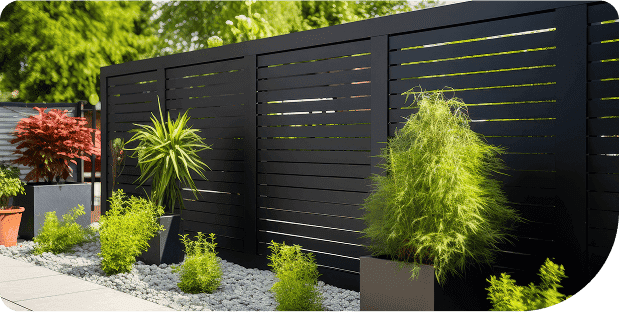
Beyond mesh, a solid fence (with horizontal or vertical boards) provides a more polished appearance and often better privacy. Composite fencing mimics wood with less upkeep, while aluminum offers maximum durability and a wide choice of colors.
How to Choose Based on Your Needs
Your situation
Recommended solution
Limited budget, large area to fence
Flexible mesh fence
Permanent fence, minimal maintenance wanted
Rigid mesh fence
Sloped ground or narrow entrance
Sliding gate
Flat ground, limited gate budget
Swing gate
Looking for a wood-like appearance
Composite fence
Need maximum durability and color options
Aluminum fence
Common Mistakes to Avoid
Choosing based only on price. Flexible mesh may cost half as much as rigid mesh, but if you need to replace it once before the rigid version wears out, you could end up spending the same or more.
Not checking local zoning rules before buying. Maximum fence height, and sometimes even the look or material, may be regulated by your local planning department. Checking first helps you avoid having to redo your purchase.
Undersizing the gate for your property. Installing a swing gate on a slope or a sliding gate without enough space to open are both common and costly mistakes to fix later.
Overlooking the real maintenance you're willing to do. A cheaper option that requires more upkeep (like flexible mesh or fabric privacy screens) isn't right for everyone. Be honest about the time you can commit before you buy.
Frequently Asked Questions
Should you buy the fence or the gate first? It's best to choose your fence type first, since it often determines the style and sometimes even the supplier for a matching gate. Buying both from the same range also ensures a consistent look and easier automation compatibility.
Do you need a professional to install a fence? Installing flexible or rigid mesh fencing with standard posts is manageable for a skilled DIYer. Installing a motorized gate, especially a sliding model with foundations, is more technical and usually worth hiring a professional—at least for the groundwork and anchoring.
What budget should you plan for fencing a 5,400 sq ft lot? Depending on materials, expect to spend between $1,000 and $10,000 for both fencing and gate, not including installation. Flexible mesh is entry-level, while aluminum fencing with a motorized sliding gate is at the high end.
Can you mix different types of fencing on the same property? Yes, that's actually common: rigid mesh at the back, a solid fence for curb appeal, and a privacy screen for a patio or pool area.