Any questions?

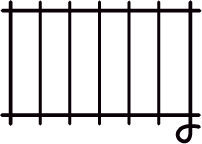


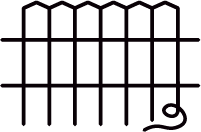







Rigid mesh fencing provides greater strength and a more structured look, making it ideal for long-term property boundaries with minimal upkeep. Flexible mesh is less expensive and easier to install on uneven or sloped ground, but it requires more frequent maintenance and generally has a shorter lifespan. Your decision should be based on three main factors: your budget, the type of terrain, and the level of durability you need.
If you remember just one rule: for a permanent fence around your home, rigid mesh is almost always the best long-term investment. For temporary fencing, a vegetable garden, or challenging terrain, flexible mesh remains the simplest solution.
What really sets these two types of mesh apart?
Rigid mesh fencing is made from pre-shaped welded panels, usually galvanized or coated steel, mounted on posts. Its structure stays in place and doesn’t loosen over time, unlike flexible mesh, which comes as a roll of twisted wire (single or double twist) stretched between stakes.
This difference in construction explains most of the price, installation, and durability differences between the two products.
Detailed comparison
Criteria
Rigid mesh
Flexible mesh
Average price per linear foot
$5 to $12
$1 to $3
Installation type
On posts, requires level ground
On stakes, adapts to uneven terrain
Impact and intrusion resistance
High
Moderate
Maintenance
Low (no retension needed)
Regular (needs retensioning, prone to rust)
Average lifespan
10 years
8 years
Appearance
Structured, aligned, higher quality look
More discreet, less rigid visually
Ease of solo installation
Moderate (heavier panels)
Good (lightweight roll)
When to choose each option
Rigid mesh is a good fit if:
• You want a long-lasting fence that needs almost no maintenance for up to 20 years.
• Your property is flat or gently sloped, without major elevation changes.
• You need higher security or deterrence (against intruders or animals).
• You prefer a structured, aligned look, especially in suburban or residential areas.
• You plan to match your fence with a gate from the same product line.
Flexible mesh is a good choice if:
• You’re on a tight budget and need to fence a large area.
• The ground is uneven, sloped, or hard to access for rigid panels.
• The fence is temporary or for short-term use (construction, animal enclosure, garden).
• You’re able to keep up with regular maintenance (retensioning, checking for rust).
What does it really cost for a typical yard?
For a 5,400 sq ft lot needing about 200 feet of fencing, not including a gate:
• Rigid mesh: $1,000 to $2,400 for materials, installation not included.
• Flexible mesh: $200 to $600 for materials, installation not included.
The initial price difference is significant, but consider the lifespan: over 20 years, replacing flexible mesh once or twice can end up costing as much—or more—than installing rigid mesh just once.
Frequently asked questions
What height should a garden fence be? In the US, there’s no universal maximum height for fences between neighbors, but local zoning codes may set limits, often around 6 feet. Always check with your local building department before buying.
Does rigid mesh fencing require a permit? Usually not for a standard fence, unless your area is designated as protected or local rules require it. Some neighborhoods or historic districts may ask for a permit or prior approval.
Can you combine rigid mesh with privacy screening? Depending on the materials, expect to spend between $1,000 and $10,000 for both fence and gate, not including installation. Flexible mesh is entry-level; an aluminum fence with a motorized sliding gate is top of the range.
Can you mix different types of fencing on the same property? Yes, this is quite common. Rigid mesh provides structure and strength, while privacy screens (fabric, reed, or slats) add the desired level of privacy without compromising the fence’s stability.
Does flexible mesh rust quickly? It depends on the coating. Basic galvanized steel mesh may show signs of rust after a few years in damp conditions. PVC-coated or stainless steel versions are much more resistant, but cost more upfront.
Can you install rigid mesh fencing yourself? Yes, it’s doable for a DIYer with basic tools (level, drill, setting posts), but it requires more precision than flexible mesh since panels must be perfectly aligned between fixed posts.